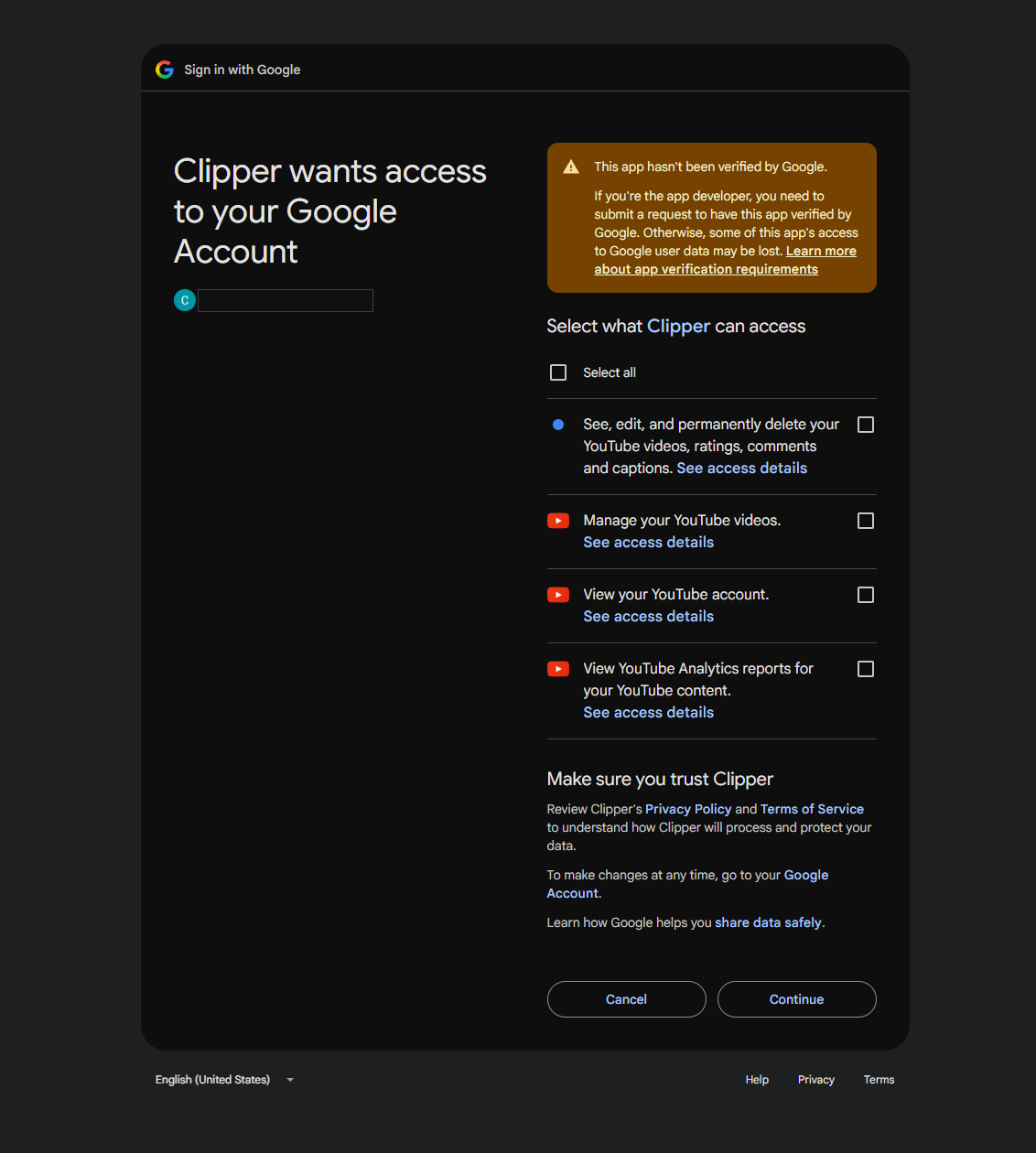
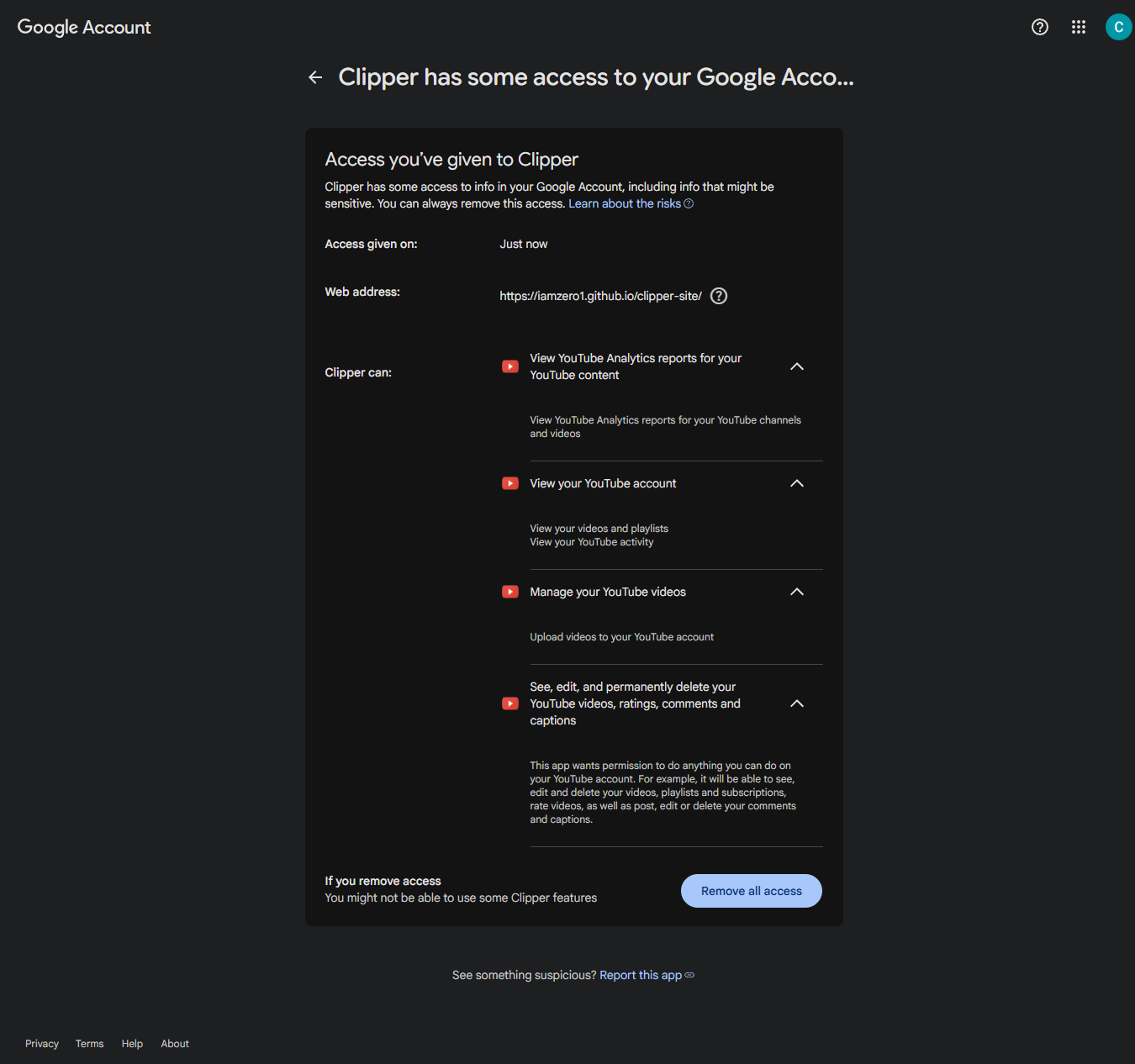
Google treats an OAuth app in “testing” mode gently in some ways and harshly in one: its refresh tokens expire after seven days. For a pipeline that uploads to YouTube unattended, that meant re-authorising by hand every week or the scheduled tick would stop with a refresh error.
Moving the app to production status removes that limit, but Google’s consent screen requires a homepage, a privacy policy, and terms of service it can link to.
clipper-site
So the marketing site exists because of a form. It is three static HTML pages, home, privacy, and terms, hosted on GitHub Pages. It was written and published on the same day the app was switched to production.
The site has been revised a few times since. On 2026-10-03 it dropped references to the specific channel it serves and took on the orange “Ember” palette that the app adopted the same day.
What it unlocked
With production status, a sign-in lasts until it is revoked or goes unused for six months. The Health panel in the app still shows the token’s age and expiry so a lapse is visible, but the weekly ritual is gone.
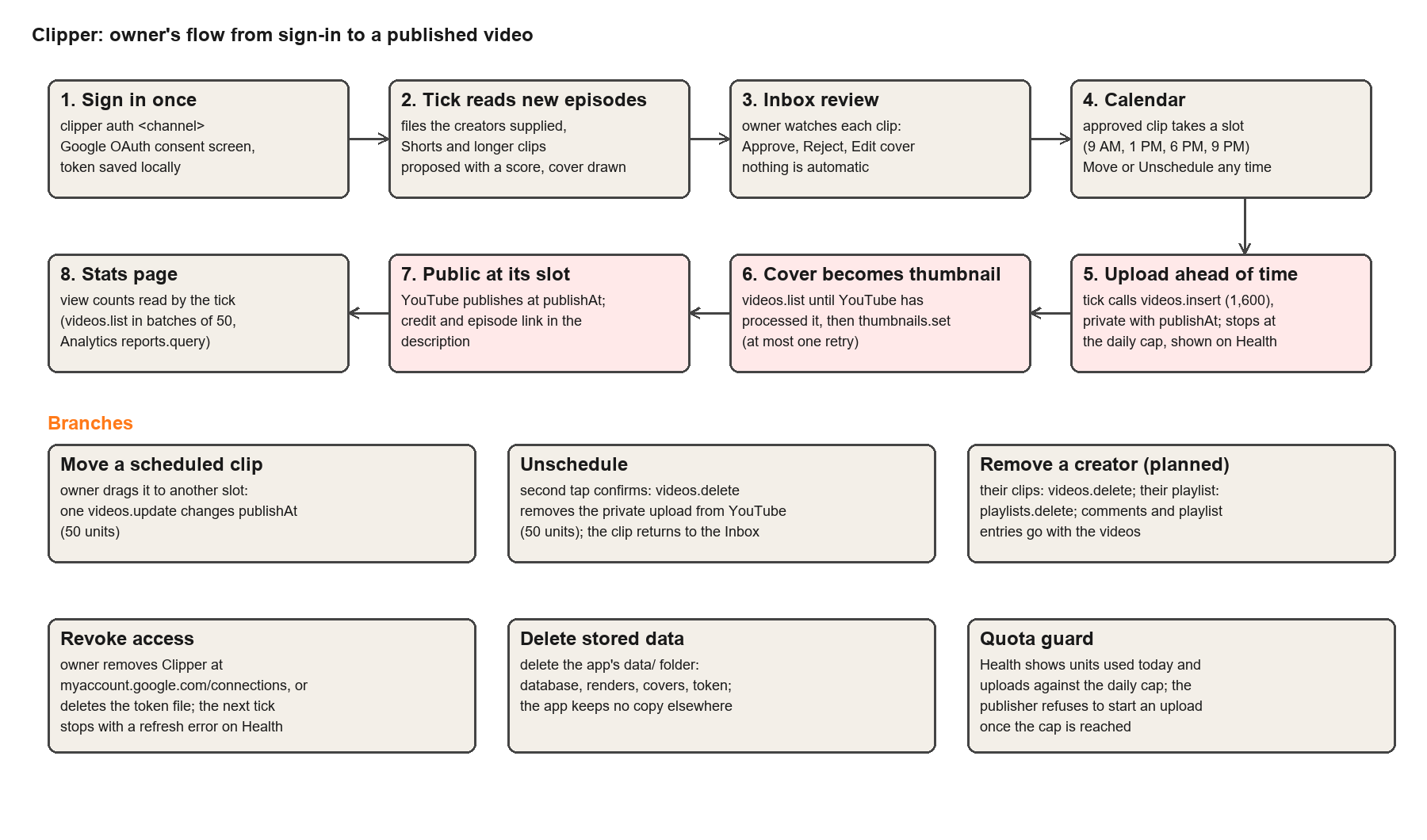
The owner’s flow, end to end
The diagram below was drawn for the Google verification submission. It follows one clip from sign-in to a public video and lists the branches: moving or unscheduling a clip, revoking access, deleting stored data, and the quota guard.